

Former President Olusegun Obasanjo has described his decision to pick Atiku Abubakar as his running mate in the 1999 presidential election as the biggest mistake of his presidency.
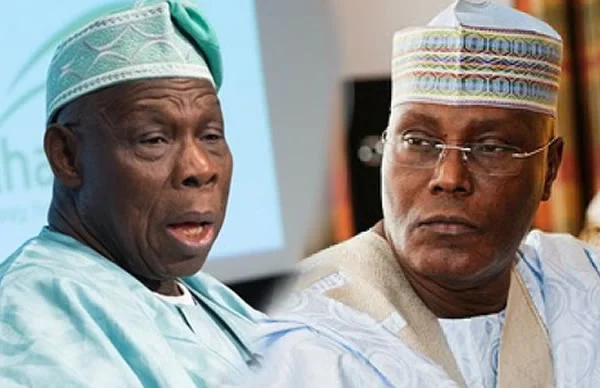
Obasanjo made the remark in Lagos during a public conversation with activist and entertainer Charles Oputa, popularly known as Charly Boy, at the launch of a foundation and memoir titled 999: A Memoir in Tribute to Late Justice Chukwudifu Oputa.
Reflecting on his time in office, Obasanjo said that although leaders inevitably make mistakes, his choice of vice president remains the one he regrets most.
“The man I picked as my running mate… if I had known him as I later did, I would not have chosen him,” he said.
When asked to confirm he was referring to Atiku, Obasanjo responded by reiterating that he meant his former vice president.
Despite the criticism, Obasanjo said he holds no personal bitterness, noting that both men acted based on their convictions.
“There’s no bitterness. He did what he believed he should do, and I did what I had to do for Nigeria,” he added.
Obasanjo and Atiku served as Nigeria’s first democratically elected President and Vice President after the end of military rule in 1999 under the Peoples Democratic Party (PDP). Their administration initially worked closely on economic reforms and governance initiatives.
However, their relationship later broke down during Obasanjo’s second term, especially after Atiku opposed efforts to amend the Constitution for a third presidential term. The fallout led to a prolonged political and legal battle, including a Supreme Court ruling that affirmed the vice president could not be removed from office by the president.
Since leaving office, both leaders have repeatedly exchanged accusations over corruption, loyalty, and political ambition. Although they briefly reconciled ahead of the 2019 presidential election, their alliance was short-lived.
Obasanjo’s latest comments are among his strongest public criticisms of Atiku in recent years, revisiting a long-standing political rivalry that has shaped Nigeria’s democratic history.

Leave feedback about this