

The United Nations World Food Programme (WFP) has raised fresh concerns over a worsening food crisis in northern Nigeria, warning that millions could face severe hunger without urgent intervention.
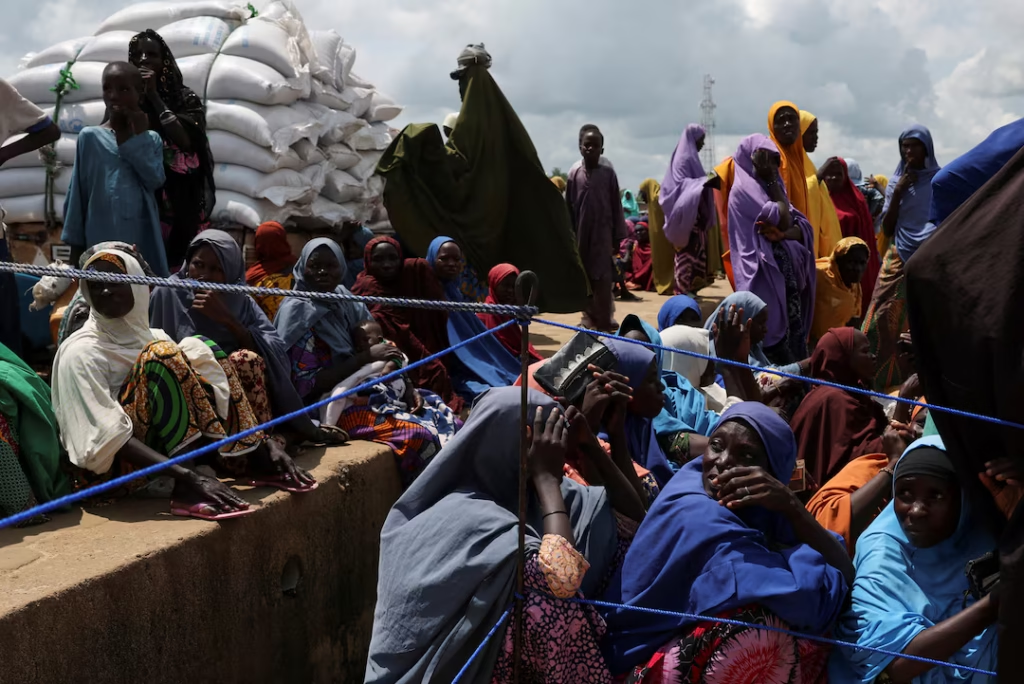
In its latest report, the agency said escalating insecurity, rising food prices, and dwindling humanitarian funding are driving the region toward its worst hunger crisis in nearly a decade. More than 17 million people across nine conflict-affected states are currently experiencing crisis to catastrophic levels of food insecurity, an increase of nearly two million from earlier projections.
Borno State remains the hardest hit, with over three million people facing acute hunger. Of these, more than 750,000 are in severe conditions, while over 10,000 are at catastrophic levels.
The WFP attributed the crisis to persistent violence that has forced farmers off their land, disrupted food production, and limited access for humanitarian aid. The number of inaccessible areas has doubled, while attacks and illegal checkpoints continue to hinder the delivery of relief supplies.
Despite growing needs, the agency said it can currently support only about 740,000 people in the Northeast, leaving millions without assistance. This marks a sharp drop from the 1.3 million people reached during the 2025 lean season.
The WFP warned that funding shortages have already led to the suspension of food aid in some communities, pushing vulnerable households toward extreme coping strategies, including displacement and, in some cases, joining armed groups for survival.
Women and children are said to be the most affected, with increasing reports of exploitation and gender-based violence in areas where food assistance has been cut.
To sustain operations, the agency is seeking $89 million in urgent funding over the next six months. Without this support, it warned, hunger, displacement, and instability will worsen.
The broader national picture is also concerning, with an estimated 36.2 million Nigerians now facing food insecurity. Analysts say insecurity, inflation, and limited government response remain key drivers of the crisis.
The WFP called for immediate action to restore security, support farmers, and expand humanitarian access to prevent further deterioration.






Leave feedback about this