One year after a devastating flood killed over 200 people in Mokwa Local Government Area of Niger State, survivors say recovery remains slow, with growing concerns over the management of more than N5 billion in donations.

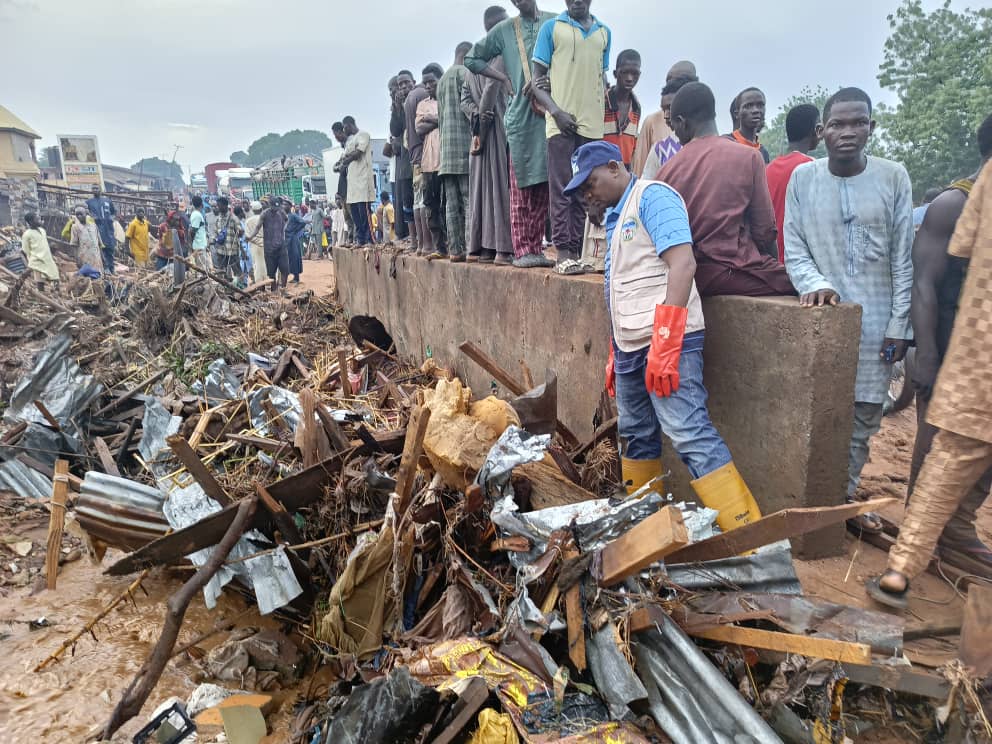
The May 29, 2025, flood destroyed homes, displaced thousands, and wiped out livelihoods across several communities, including Tiffin Maza and Anguwan Hausawa. While floodwaters have receded, many victims say they are still struggling to rebuild their lives.
In Rabba community, residents continue to face hardship following the collapse of a key bridge linking them to neighboring areas. Farmers and traders report rising transport costs, while schoolchildren rely on a temporary wooden bridge built by locals. On May 29, 2026, residents staged a peaceful protest, urging the state government to fulfill its promise to reconstruct the bridge.
Following the disaster, governments, organizations, and individuals pledged billions in cash and relief materials. Official records show over N5 billion was paid into the state’s emergency account, alongside food supplies and other aid.
However, the state government has yet to publicly disclose how much has been disbursed or how many victims have benefited, fueling allegations of mismanagement.
Community leaders claim many victims remain without support. Dauda Liman, chairman of a local flood support group, said some promised relief items were not fully delivered, while others are still awaiting compensation.
There are also allegations that beneficiary lists were altered, excluding genuine victims. Committee officials say names submitted after verification exercises were changed before payments were made.
Some survivors shared similar concerns. Yahuza Abdullahi, who lost nine family members, said he received N500,000 but expected more support. Others claim they have received little or nothing despite losing homes and businesses.
Donors have also raised concerns. One organization alleged its contributions were omitted from official records and called for a full account of all donations to ensure transparency.
The issue has taken a legal turn, with victims petitioning anti-corruption authorities to investigate alleged diversion and mismanagement of relief funds.
Meanwhile, the federal government has begun steps toward building permanent housing for displaced residents. Preliminary work has started at a new site, although some locals remain skeptical, citing a lack of visible construction.
State emergency officials say they were only responsible for verifying beneficiaries, while financial management of donations was handled by the Ministry of Finance. Efforts to obtain further government response were unsuccessful.
As reconstruction efforts continue, residents insist that true recovery depends not only on housing but also on rebuilding infrastructure, restoring livelihoods, and ensuring transparency in the use of relief funds.