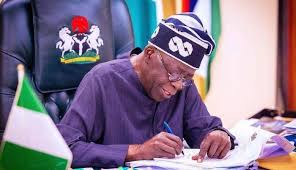
President Bola Tinubu says his administration’s economic reforms are laying the foundation for sustainable growth, job creation and shared prosperity, but acknowledges that more work is needed to improve Nigerians’ livelihoods.


Speaking through Vice-President Kashim Shettima at the opening of the 32nd Nigerian Economic Summit in Abuja on Monday, Tinubu said the government was working to remove structural barriers that had prevented Nigeria from reaching its economic potential.
The summit, themed “Growth That Works: Delivering Jobs, Productivity and Shared Prosperity,” focused on translating economic reforms into better living standards, productive employment and inclusive growth.
Tinubu said Nigeria’s real gross domestic product grew by 3.89 percent in the first quarter of 2026, up from 3.13 percent in the corresponding period of 2025. He added that non-oil activities accounted for 96.08 percent of GDP, while manufacturing grew by 3.29 percent.
He also disclosed that capital importation rose to $10.37 billion in the first quarter of 2026, an 83.83 percent increase from the same period in 2025.
The President said the government would continue to improve the business environment, expand access to finance and reform the electricity market to attract investment. Other priorities include strengthening agricultural value chains and promoting local processing and exports in the solid minerals sector.
He stressed that economic progress must be measured not only by growth figures but also by the quality of jobs created, workers’ productivity and the competitiveness of Nigerian businesses.
UN Deputy Secretary-General Amina Mohammed acknowledged the reforms but urged the government to consolidate and stabilise the gains while managing public expectations.
Minister of Finance and Coordinating Minister of the Economy, Taiwo Oyedele, presented a draft Nigerian Economic Policy Framework and invited the NESG and private-sector experts to review it. He said the framework was built around enterprise, fair markets and coordination across government.
NESG Chairman Olaniyi Yusuf said the summit should focus on stabilizing the economy and turning policy decisions into practical results rather than reversing ongoing reforms.
BUA Group Chairman AbdulSamad Rabiu also commended the reforms, particularly improvements in access to foreign exchange, which he said had made business planning more predictable. However, he acknowledged the economic difficulties facing ordinary Nigerians.