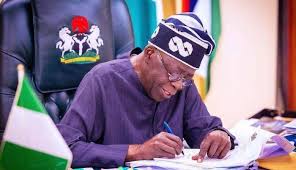
President Bola Tinubu has declared that Nigeria has moved beyond the difficult phase of his administration’s economic reforms, saying the country is entering a new era focused on prosperity, jobs, and improved living standards.

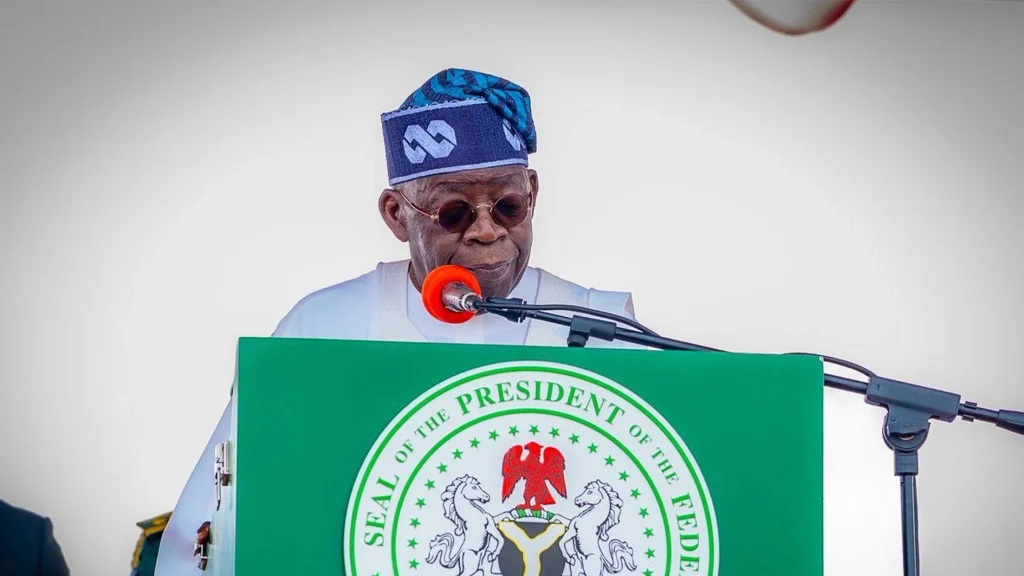
Tinubu stated this in his Independence Day address on Thursday, where he said the reforms introduced since 2023 had corrected the country’s economic direction and laid the foundation for long-term growth.
The President said Nigeria’s economy had grown by more than four percent in 2026, while inflation had fallen from its peak, foreign reserves had been rebuilt, the foreign exchange market had stabilized, and oil theft had declined.
He also highlighted Nigeria’s record non-oil export performance, saying the country generated more than $6 billion from non-oil exports in 2025. The Nigerian Export Promotion Council reported that non-oil exports reached $6.1 billion last year, an 11.5 percent increase from $5.4 billion in 2024.
The National Bureau of Statistics, meanwhile, reported that real GDP grew by 3.89 per cent year-on-year in the first quarter of 2026, while its latest inflation data put headline inflation at 15.39 per cent.
Tinubu acknowledged that despite the economic improvements cited by his administration, millions of Nigerians still face difficulties paying for food, education, healthcare, and transportation.
He said the hardship was the result of years of low productivity, inadequate infrastructure, and limited economic opportunities, adding that the reforms were intended to address those structural problems.
“The emergency treatment is over. The foundation has been repaired,” Tinubu said, declaring that the government’s central economic task had now shifted from correcting the country’s course to achieving “shared and widespread prosperity.”
According to the President, the next phase will prioritize reducing the cost of living, creating productive jobs, expanding agriculture and industrial production, improving infrastructure, and tackling poverty.
He said the government would increase investment in mechanized farming, irrigation, storage, and transportation while improving roads, railways, and ports to reduce the cost of moving goods from farms and factories to consumers.
Tinubu also pledged greater support for industries, digital connectivity, and businesses, saying the government would use Nigeria’s gas resources to power industries, revive factories, and provide Nigerians with skills and financing needed for productive employment.
On social protection, he said the government would strengthen support for poor households, improve the National Social Register, and expand access to education loans, consumer credit, healthcare, and other basic services.
Tinubu said the government’s objective was not simply to manage poverty but to reduce it through sustained economic growth and the creation of millions of productive opportunities.
“For the first time in decades, we embark on this task from a position of strength,” he said, adding that Nigeria had “corrected its course” and must now move forward without looking back.
The President’s latest address builds on his earlier calls for a shift from economic stabilization to broader growth and shared prosperity. In his June 2026 Democracy Day address, he similarly said the next phase of his administration would focus on accelerating growth and ensuring that economic gains were felt by Nigerians.