

State governments across Nigeria had left N264.12bn in Universal Basic Education Commission (UBEC) matching grants unspent as of July 2025, despite dilapidated classrooms, overcrowding and shortages of learning materials in public schools.
The 2025 UBEC Annual Report, obtained, showed that the funds had been released to State Universal Basic Education Boards but remained unspent in state government accounts during financial monitoring visits conducted on July 21, 2025.
Benue recorded the highest unspent balance at N19.18bn, followed by Imo with N14.12bn, Osun with N14.02bn, Kwara with N13.99bn and Delta with N13.40bn. Together, the five states accounted for N74.72bn, representing about 28.3 percent of the total.
Other states with substantial balances included Borno, N13.20bn; Anambra, N12.67bn; Kano, N12.15bn; Adamawa, N11.38bn; and Gombe, N11.09bn.
The findings have raised concerns about the management of funds intended to improve basic education, particularly as pupils in several communities continue to learn in overcrowded classrooms, makeshift structures and deteriorating school buildings.
Education funding under scrutiny
The Federal Ministry of Education’s Nigeria Education Statistics 2024 portal put the national learner-to-classroom ratio at 60.1, compared with the recommended benchmark of 35 learners per classroom. However, only 53.7 per cent of schools were represented in the dataset, highlighting gaps in reporting.
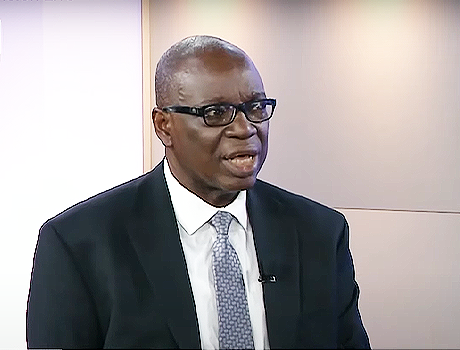
Human rights lawyer Femi Falana (SAN) criticised the failure to utilise funds meant for basic education, accusing governors of neglecting children from poor backgrounds.
He called on state governments to deploy released intervention funds, meet the requirements for accessing counterpart grants and ensure greater accountability in the delivery of free and compulsory basic education.
The unspent balances, however, do not establish how many classrooms could have been built or renovated with the money. Such an assessment would require details of approved projects, procurement costs and expenditure plans.
The funds could support classroom construction and rehabilitation, desks, instructional materials, sanitation facilities and teacher development, subject to approved state action plans.
Benue, Kwara schools face challenges
Benue, which recorded the highest unspent balance at N19.18bn, continues to face concerns over the condition of some public schools, including facilities affected by insecurity and years of inadequate maintenance.
Stakeholders in the state questioned why the reported funds had not translated into improved school infrastructure, particularly in communities where buildings had been damaged by attacks.
A local government chairman, who spoke on condition of anonymity, disputed suggestions that the unspent balance indicated corruption. He attributed the delay to outstanding requirements for approved projects under an education programme.
The report also highlighted concerns in Kwara, where N13.99bn was listed as unspent.
A previous report documented deteriorating classrooms at Warah Community Junior Secondary School in Ilorin West Local Government Area, including collapsed ceilings, broken windows and inadequate furniture. Some pupils reportedly relied on makeshift shelters provided by community members.
At Government Day Secondary School in Lafiagi, Kwara North, renovation work on some classroom blocks and an examination hall had reportedly remained incomplete since 2025, forcing students to share available learning spaces.
However, the Chairman of the Kwara State Universal Basic Education Board, Raheem Adaramaja, disputed the reported balance, saying he did not know its source and that the figure was inaccurate. He did not provide an alternative figure or supporting records when asked about the state’s grant utilisation.
Osun cites financial constraints
Osun State, which had the third-highest reported balance at N14.02bn, attributed its difficulties in accessing fresh UBEC grants to financial constraints.
The state Commissioner for Education, Dipo Eluwole, said the administration of Governor Ademola Adeleke had cleared outstanding counterpart-funding obligations for 2019 to 2023, enabling the state to access grants for those years.
However, he said the government was struggling to raise the required counterpart funding for subsequent grants, citing financial pressures and the alleged withholding of local government allocations since February 2025.
Eluwole put the counterpart-funding requirements at about N3.5bn in the previous year and N2.7bn in the current year.
He said the state was also meeting other obligations, including salaries, pensions and healthcare costs, which had placed additional pressure on available revenue.
The explanation highlights an important distinction in the UBEC scheme: funds already released but left unspent are different from grants that states cannot access because they have not provided the required counterpart funding.
How UBEC matching grants work
UBEC provides federal intervention funds to support basic education, including primary and junior secondary schooling.
Under the matching-grant arrangement, states generally provide counterpart funding equivalent to 50 percent of eligible project costs and submit approved action plans to access the federal contribution.
The arrangement is intended to ensure that federal and state governments share responsibility for improving basic education.
In July 2025, UBEC Executive Secretary Aisha Garba raised concerns about the slow utilisation of intervention funds, non-compliance with financial guidelines, alleged diversion, tax-remittance failures, procurement irregularities and departures from approved action plans.
The concerns were raised during a financial management training programme for officials responsible for managing education intervention funds across the states and the Federal Capital Territory.
Accountability questions remain
The N264.12bn figure covers unspent balances recorded during the commission’s monitoring visits in July 2025. It does not establish the current balances or explain why each state failed to spend the money.
The report also does not identify how much each administration received, inherited or failed to utilise, making it difficult to assign responsibility solely to the governors in office during the monitoring exercise.
Establishing accountability would require records showing when funds were released, the projects approved, expenditure incurred, implementation deadlines and any subsequent spending or adjustments.
The figures do not, on their own, prove that the funds were stolen or diverted. They do, however, raise questions about project planning, procurement, financial oversight and the capacity of state education agencies to implement approved programmes promptly.
With public schools continuing to face infrastructure and learning-resource challenges, pressure is likely to mount on state governments and education boards to explain the outstanding balances and demonstrate how intervention funds are being translated into better learning conditions for Nigerian children.


Leave feedback about this