

The House of Representatives on Wednesday stepped down a proposed bill seeking to ban the production, importation, and sale of unbranded and unfortified edible oils, following sharp divisions among lawmakers.
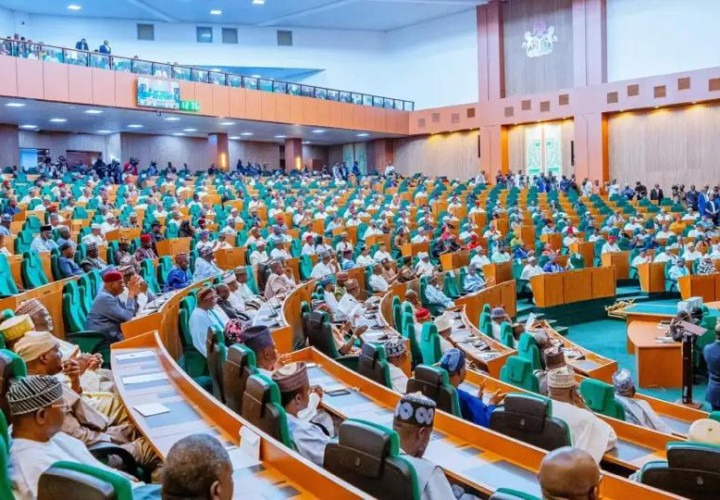
The bill, sponsored by Rep. Chike Okafor (Imo), was scheduled for second reading but was deferred after members raised concerns over its potential economic impact and limited circulation of the draft.
Leading the debate, Okafor said the legislation aims to tackle public health risks linked to widespread consumption of unfortified cooking oils in Nigeria. He cited data indicating that about 67% of Nigerians consume unbranded oils, while only 31% of available oils are fortified. Referencing the World Health Organization (WHO), he described food fortification as a proven and cost-effective way to address micronutrient deficiencies.
The proposed law would criminalize the production and sale of unbranded and unfortified oils, introduce penalties for offenders, and provide a transition period for compliance. It also seeks to promote partnerships to improve local oil production and processing.
However, several lawmakers opposed the bill, warning it could harm rural livelihoods and duplicate the roles of existing regulators. Rep. Paschal Agbodike (Anambra) said the measure could negatively affect small-scale palm oil producers, while Rep. Gaza Gbefwi (Nasarawa) argued that agencies like the National Agency for Food and Drug Administration and Control (NAFDAC) and the Standards Organisation of Nigeria (SON) already have oversight responsibilities.
Others, including Rep. Wale Raji (Lagos), called for strengthening existing regulations rather than introducing new laws. In contrast, Rep. Sada Soli (Katsina) supported the bill, saying it would complement current frameworks and improve food safety standards.
Lawmakers also noted that many members had not received copies of the bill, limiting informed debate.
Responding, Okafor requested more time for consultations and wider circulation. Deputy Speaker Benjamin Kalu, who presided over the session, granted the request and postponed further consideration.
The move comes amid ongoing concerns over food safety and nutrition in Nigeria, where enforcement gaps continue to allow the circulation of unregulated edible oils despite existing fortification policies.






Leave feedback about this