

The Federal Government has said it has no immediate plans to seek financial assistance from the International Monetary Fund, despite the Fund’s proposed $20 billion to $50 billion support package for struggling economies, including those in Africa.
Minister of Finance and Coordinating Minister of the Economy, Wale Edun, made the position known during a press briefing at the ongoing Spring Meetings of the World Bank and IMF in Washington, D.C.
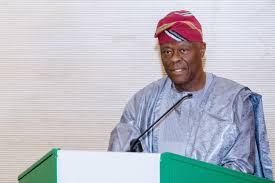
Responding to questions on whether Nigeria would tap into the IMF facility, Edun stated that the government was not considering taking on additional financial obligations at this time.
His remarks come a day after IMF Managing Director, Kristalina Georgieva, urged countries facing economic pressures to act quickly in seeking financial support when needed, warning that delays could worsen economic conditions.
Georgieva disclosed that the IMF expects demand for its support to range between $20 billion and $50 billion, targeting both existing and emerging economic challenges in several countries, particularly in Sub-Saharan Africa.
Despite this, Nigeria’s finance minister maintained that the country would not approach the Fund for borrowing under the proposed facility.
Edun, however, stressed that African economies require additional support in light of mounting global pressures, especially the economic fallout from ongoing tensions in the Middle East. He noted that the crisis is having a disproportionate impact on African nations, many of which are vulnerable to external shocks.
According to him, the situation poses risks to macroeconomic stability, economic growth, job creation, and poverty reduction across the continent, particularly for oil-importing countries.
Georgieva also highlighted the broader global implications of the Middle East conflict, noting that disruptions to supply chains and infrastructure are already pushing up prices and slowing global growth.
She projected that global economic growth could decline from 3.4 percent last year to 2.1 percent in 2026, with a potential worst-case scenario of around 2 percent if the crisis persists and oil prices remain elevated.
The IMF chief added that many of the hardest-hit countries are in Sub-Saharan Africa and said the institution is working to identify those most in need of support.
She further advised governments to adopt prudent fiscal policies and build economic buffers during stable periods to better withstand future shocks, emphasizing that sound economic management remains key to resilience in uncertain times.



Leave feedback about this