

The Federal Government has announced plans to phase out the policy separating Junior Secondary Schools (JSS) from Senior Secondary Schools (SSS), citing its role in Nigeria’s growing dropout crisis.
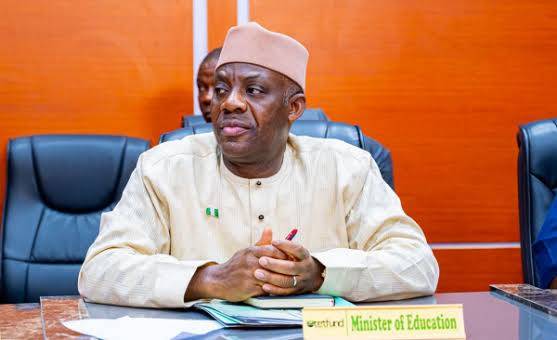
Minister of Education, Dr. Tunji Alausa, disclosed this on Tuesday in Abuja during the inauguration of the UBEC Ministerial Implementation and Monitoring Committee.
He said the policy, which created separate administrative and physical structures for JSS and SSS, has failed and contributed to more than 20 million students dropping out before reaching senior secondary school.
According to the minister, the system has led to overcrowded junior secondary schools and underutilized senior secondary facilities across several states. He also highlighted a major infrastructure gap, noting that Nigeria has about 80,000 public primary schools but only around 15,000 junior secondary schools.
Alausa said the imbalance has made it difficult for students to transition to higher levels of education, leaving millions stranded after primary school. He added that the policy also prioritized administrative positions over students’ needs.
“The policy has failed. We will phase it out and focus on what is best for every Nigerian child,” he said.
The proposal will be presented to the National Council on Education for approval as part of broader reforms aimed at expanding access and improving learning outcomes.
As part of the reforms, the government has also set up a committee chaired by Prof. Rashid Aderinoye to oversee the completion and operation of UBEC-funded Smart, Bilingual, and Alternative Schools.
The minister noted that many of these projects remain unfinished or unused despite significant public investment, describing the situation as a waste of resources and a barrier to education access.
Nigeria currently has one of the highest numbers of out-of-school children globally, with millions unable to progress through the education system due to structural and access challenges.




Leave feedback about this