

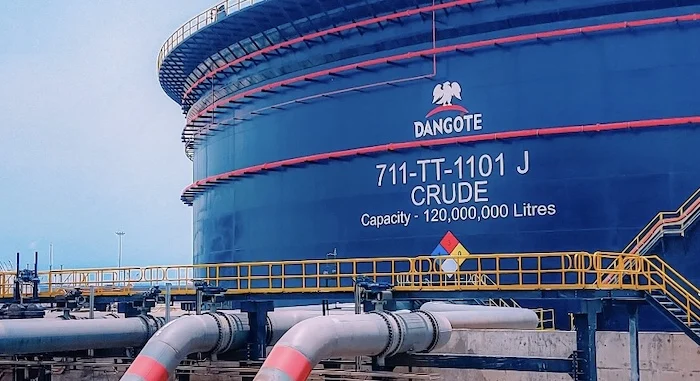
Nigeria has surpassed the United States as a leading supplier of jet fuel to Europe, driven by increased output from the Dangote Petroleum Refinery.
According to a report by S&P Global Commodity Insights, Nigeria exported about 466,000 metric tons of jet fuel to Europe in June, nearly double the 232,000 metric tons recorded in May. The June volume, estimated at about 582.5 million litres, is valued at roughly N757 billion.
The surge marks Nigeria’s highest jet fuel export to Europe since it became a net exporter of aviation fuel in 2024, following the start of production at the Dangote refinery.
In contrast, U.S. jet fuel exports to Europe declined sharply, dropping from 818,000 metric tonnes in April to 399,000 metric tonnes in June, allowing Nigeria to take a larger share of the market.
The increase in supply from Nigeria and other producers has contributed to an oversupplied European jet fuel market, leading to falling prices. Data from Platts shows that jet fuel prices in Northwest Europe dropped significantly from a peak of $1,694 per metric tonne in March to about $982 by the end of June.
Market analysts attribute the oversupply to high refinery output and delayed maintenance by producers seeking to capitalize on earlier price spikes. Additional shipments from the Middle East and India are also expected to sustain supply levels in the coming months.
Despite the current glut, traders say market conditions could shift depending on geopolitical developments, particularly in the Middle East, as well as seasonal travel demand.
The Dangote refinery, currently Nigeria’s only large-scale functional refinery, continues to play a central role in the country’s transformation into a net exporter of refined petroleum products. Data from the Nigerian Midstream and Downstream Petroleum Regulatory Authority shows that Nigeria exported over 1.66 billion litres of refined products in April 2026 alone.
The trend highlights Nigeria’s growing position as a key energy supplier to global markets, particularly as disruptions in traditional supply routes reshape international fuel trade.






Leave feedback about this