The Federal Government has introduced virtual teaching services to help schools in underserved communities access qualified teachers and address shortages of subject teachers across the country.

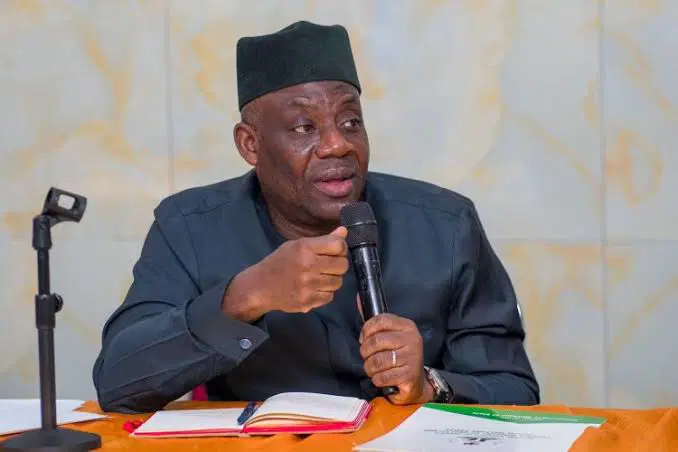
The Minister of Education, Dr. Tunji Alausa, said the initiative, known as Inspire Live, would provide live, interactive lessons for pupils in primary, junior secondary, and senior secondary schools.
Alausa disclosed this during an interview on Channels Television’s Politics Today on Tuesday night, explaining that the platform would allow pupils to connect remotely with teachers according to a central timetable.
Using Kaura Namoda in Zamfara State as an example, he said pupils in schools without English Language teachers could log on to the platform and participate in live lessons.
He said the platform covers all subjects in the national curriculum, including English Language, Mathematics, Physics, Chemistry, Biology, Civic Education, and Nigerian History.
Students can also access recorded lessons to revise topics or catch up on missed classes.
To reduce the cost of accessing the service, Alausa said the government had partnered with the Nigerian Communications Commission (NCC) to provide free data access to the platform.
Beyond supporting pupils, the minister said the government was also using digital technology to improve teachers’ capacity through Ignite, a cloud-based platform that provides lesson-planning resources, curriculum materials, and professional development support.
He added that the Federal Government was implementing a Teacher Preparedness Programme targeting nearly 50,000 teachers to strengthen their teaching skills.
The initiative comes amid concerns over teacher shortages and unequal distribution of teaching personnel across Nigeria’s public schools.
Data from the Ministry of Education’s Digital Nigeria Education Management Information System, reported in August 2026, showed that 31.8 million learners were being served by 592,077 teachers in public schools, representing an average of 53.8 learners per teacher.
Kano recorded the highest learner-teacher ratio at 88 to one, followed by Katsina at 87.4 to one and Imo at 82.2 to one.