Twenty-two companies listed on the Nigerian Exchange Limited (NGX) had cash holdings below their total debt in the second quarter of 2026, raising concerns over liquidity and refinancing risks.

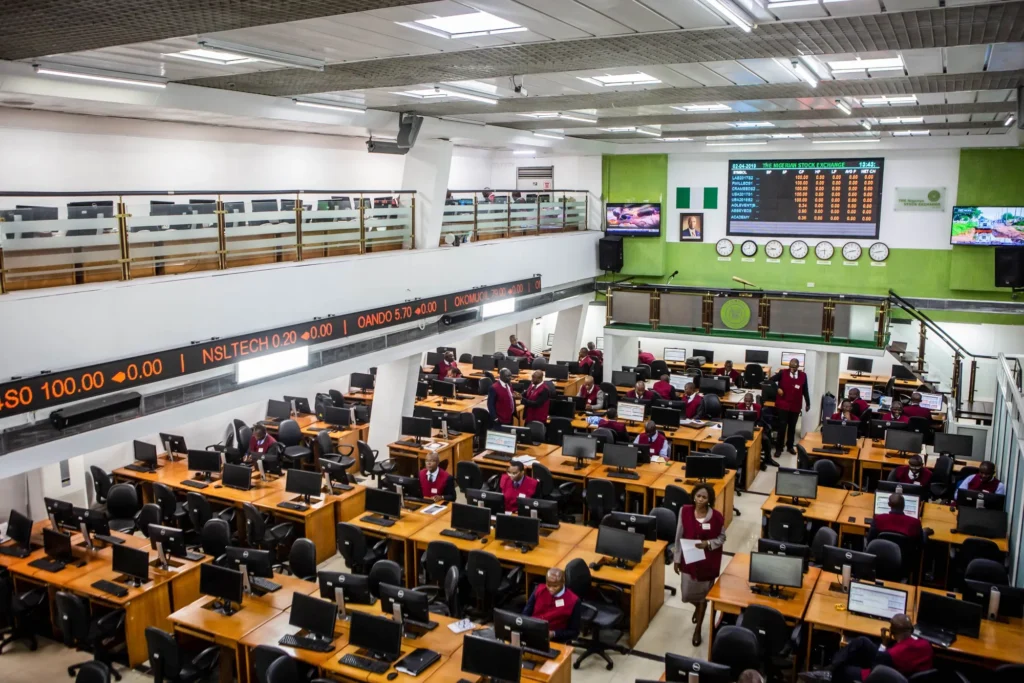
An analysis of 40 NGX-listed companies showed combined debt of about N3.9 trillion, with 18 firms recording cash/debt ratios of at least 1.0 times, while 22 had ratios below that level.
The cash/debt ratio compares a company’s cash position with its total debt. A ratio below 1.0 means the company does not have enough cash on hand to cover its total debt, although it does not, on its own, indicate financial distress because companies can also rely on operating cash flows, credit facilities, and other sources of liquidity.
Among the companies with the weakest cash cover were Caverton Offshore Support Group, with a ratio of 0.03 times; Chellarams, 0.05 times; C&I Leasing, 0.07 times; FTN Cocoa Processors, 0.08 times; and Geregu Power, 0.09 times.
Caverton had N2.46 billion in cash against N87.15 billion in total debt, while Chellarams had N235.16 million in cash compared with N5.12 billion in debt.
Other companies with cash below debt included BUA Cement at 0.46 times, BUA Foods at 0.44 times, Beta Glass at 0.34 times, Conoil at 0.20 times, Guinness Nigeria at 0.16 times, and Champion Breweries at 0.16 times.
Aradel Holdings was closer to full cash coverage, with a ratio of 0.96 times, based on N1.77 trillion in cash against N1.84 trillion in debt.
At the other end, HBM Nigeria recorded the highest cash/debt ratio at 319.07 times, followed by UPDC Real Estate Investment Trust at 283.73 times, eTranzact International at 214.89 times and CWG at 211.1 times.
Unilever Nigeria, Berger Paints, Industrial & Medical Gases, and NASCON Allied Industries also recorded cash/debt ratios well above 1.0.
Analysts said companies with stronger cash positions have greater flexibility to service debt, finance working capital, and withstand temporary disruptions in revenue. However, they cautioned that a high cash/debt ratio does not automatically indicate stronger profitability or management performance.
Ambrose Omordion, Chief Operating Officer of InvestData Consulting, said investors should assess debt alongside earnings, cash flow, interest coverage, and the maturity profile of borrowings.
He noted that high debt could boost shareholder returns when funds are invested profitably but could also increase losses when earnings and cash flows weaken.
Economic and communications expert Clifford Egbomeade also cautioned that the composition and use of cash should be examined, noting that some cash and cash equivalents may be restricted or earmarked for specific corporate commitments.
Analysts further said companies with persistently weak cash coverage could face greater refinancing and interest-rate risks, particularly when debt repayments fall due before sufficient operating cash is generated.
However, they stressed that the cash/debt ratio should be viewed alongside profitability, operating cash flow, finance costs, debt maturities, working-capital needs, and the quality of a company’s assets.
The figures therefore highlight significant differences in liquidity and capital structures among NGX-listed companies, rather than providing a standalone measure of their financial health.